{{ 'fb_in_app_browser_popup.desc' | translate }} {{ 'fb_in_app_browser_popup.copy_link' | translate }}
{{ 'in_app_browser_popup.desc' | translate }}
{{ childProduct.title_translations | translateModel }}
{{ getChildVariationShorthand(childProduct.child_variation) }}
{{ getSelectedItemDetail(selectedChildProduct, item).childProductName }} x {{ selectedChildProduct.quantity || 1 }}
{{ getSelectedItemDetail(selectedChildProduct, item).childVariationName }}
▎Capturing Memories that Cannot be Reproduced
“To read the unwritten.” ----------- Hugo von Hofmannsthal
When looking at an artwork, we may often ask, “What do I see?” What does “I see” entail? Does it mean that we understand the artistic concept, or we not only understand it but are also moved by the work? What if we can’t comprehend the concept but still resonate with the work itself? The ways of seeing seem vary by circumstances, time and space, pending on our perceptual acuity or even collective experience in a larger context.
Through the works of Emily Wang, Chiu Chen-hung, and Yeh Wei-li, this exhibition suggests a standpoint for audiences to uncover the moments when memories of objects, spaces, and events become solidified and sustained. Also explored are the countless and invisible ideas generated in the artists’ minds: How they are drawn from the artists’ respective upbringings, value system, and intimate memories, then translated and transformed, and finally materialized into visible and tangible forms.
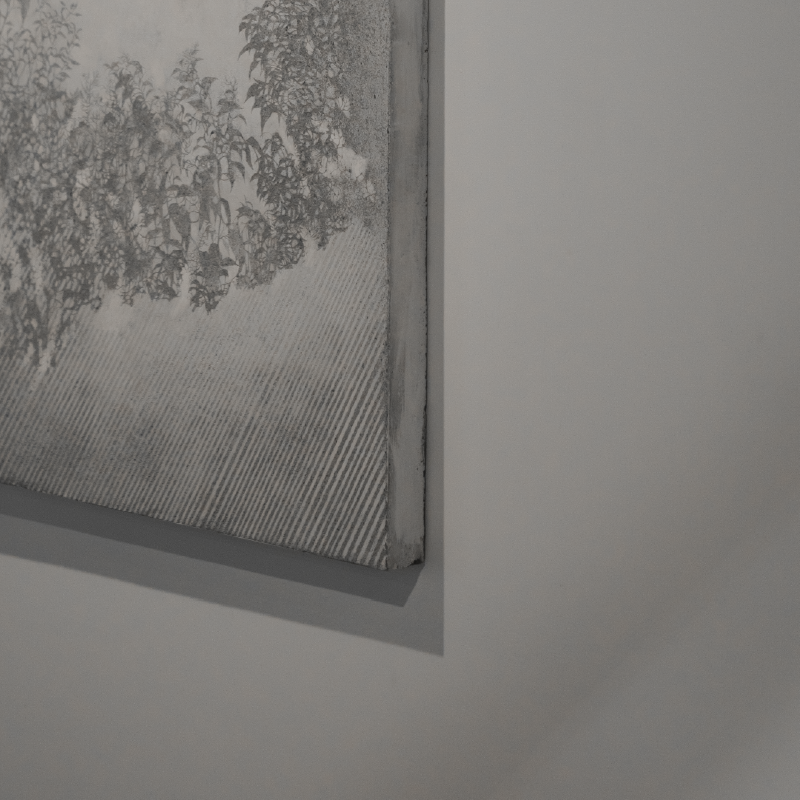
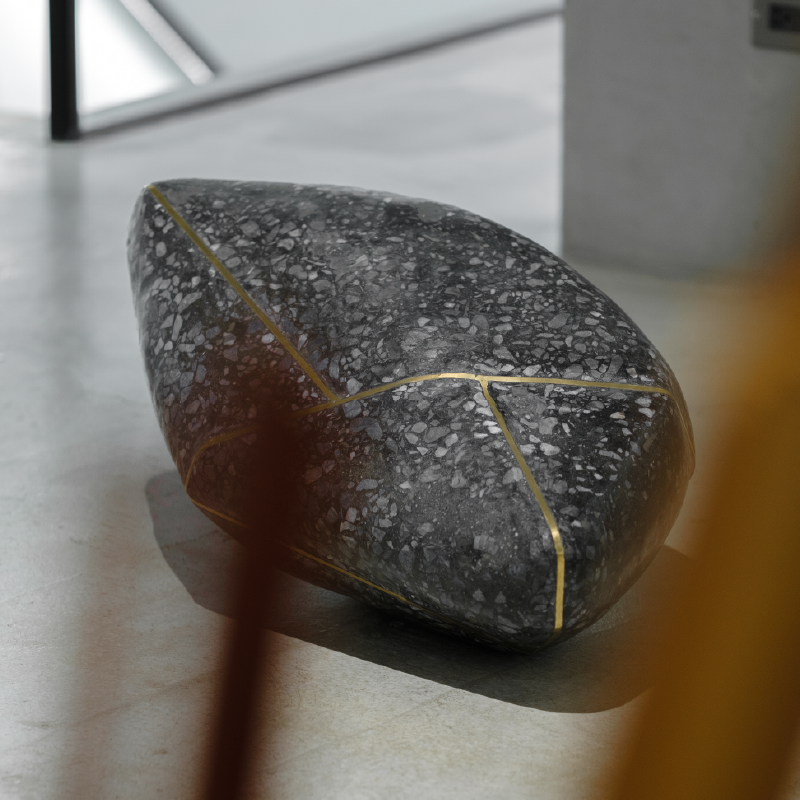
Serenity is a notable quality found in Chiu Chen-hung's works. Even with industrial materials and techniques, there is a tranquil quality emanated from within Chiu’s work throughout his artistic practices. Daylighting is a series of relief works that combine painting and sculpture into carvings of light and shadow on concrete. This series evokes a familiar scenery—tree shadows swaying outside the window, triggering us to unearth memories buried deep, personal or collective. Another series of sculptural works Embroidered Swallows employs 3D printing to enlarge the fissures and gaps in the animal sculptures of the artist's Concrete Zoo series, then inlays terrazzo with brass to create rock-like forms. Completing the fissures themselves into hefty rocks and returning artificiality to nature is another self-expression for the artist.
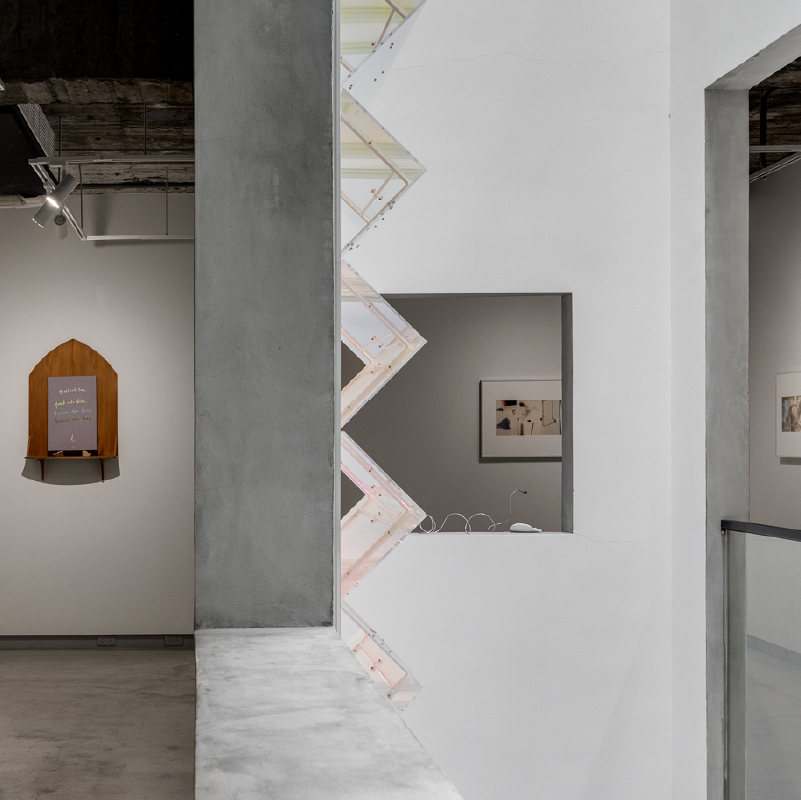
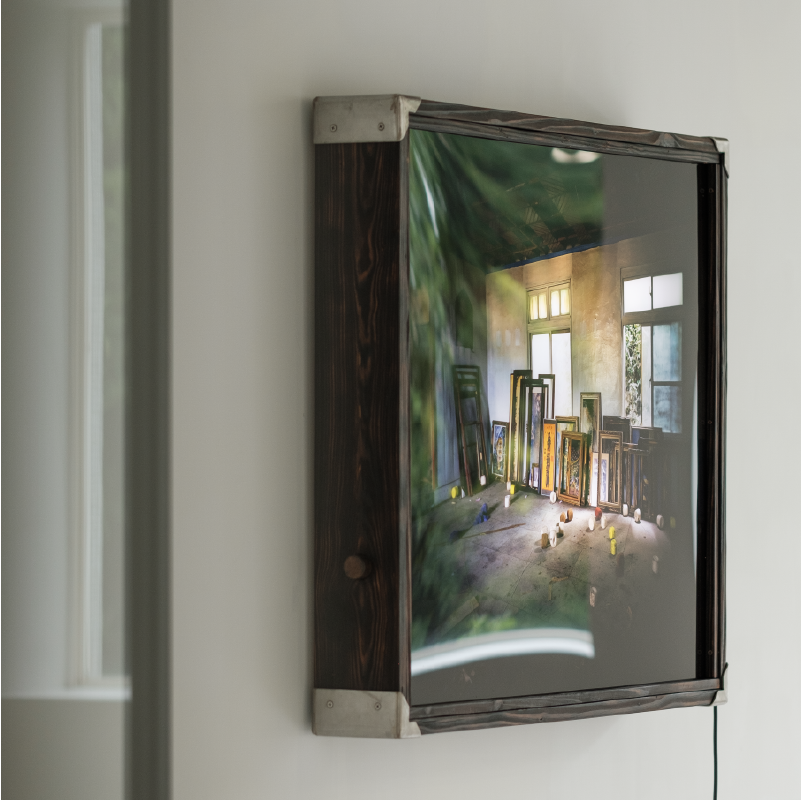
In 2016, Wei-Li Yeh relocated from Yangmei, Taoyuan to the scenic northeast coast of Shuinandong, Ruifang to undertake a project on-site: that of transforming a long-abandoned estate into a residence museum of the late Master guqin maker and painter Yeh Shih-Chiang (1926-2012). A geographically dynamic area of unusual beauty, Shuinandong is a small community nestled on the side of a cliff overlooking the Pacific Ocean. This neighborhood began as a series of multi-layered and terraced wooden rowed dormitory housing built for miners working in the vast local mining complex on the adjacent hill. Random Encounter at Shuinandong #1 depicts a setting inside an anonymous building in the community of Shuinandong where Wei-Li Yeh resides. Like a reclusive neighbor whom Yeh occasionally passes by and purposely visits from time to time. Random Encounter at Shuinandong #1, an artwork comprised of four parts, is placed at four pivotal spaces along the navigation route of the LIGHTWELL exhibition space. The movement through this spatial configuration mirrors the development of this artwork about the dynamic transformation of time and life of objects through artistic intervention. Known for his long-term site-specific projects, Yeh’s practice often revitalizes and transforms the environmental surroundings in which he occupies while compressing and distilling years of time and labor into still images. This trail of found material, text, and photography entices the viewer to question, explore, and ultimately, engage in the possibilities and the many ways of “seeing.”
Feelings of resonance, curiosity, or even confusion may arise when viewing these works. By trying to understand, sensing the relationship between ourselves and the works, and using visual clues to perceive the impalpable vibrations and ripples within, we might be able to unveil the seen and unseen, layer by layer, to truly grasp the hidden meanings of each work.
▎ 策展人 Curator
李晏禎 Jenny Lee
從事當代藝術領域相關之顧問、策展、專案執行之工作,為藝術市場觀察者,致力於推動與連結國際藝術社群想法相同的人們。喜愛生活、工作、閱讀思考、新事物與旅遊。
現為獨立策展人、自由文字與藝術工作者以及 Art Basel 瑞士巴塞爾藝術展台灣貴賓代表,於2020年策劃女性藝術家群展《Stillness》。曾任藝術家蔡佳葳工作室經理、可來音樂內容與版權總監、日本畫廊 ShugoArts 台灣代表。
▎ 藝術家 Artists
王慶蘋 Emily Wang
1971年生於台灣,畢業於美國舊金山藝術大學攝影研究所與美國賓州藝術學院繪畫所。
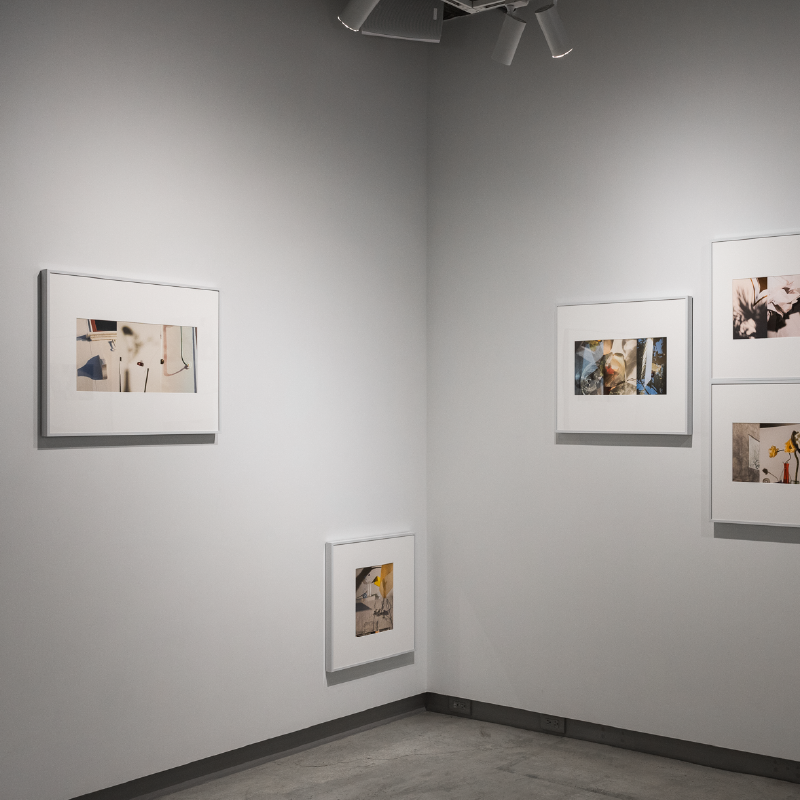
王慶蘋主要創作媒材為繪畫、攝影與素描,擅長版畫與詩。在藝術傳承上,最初與紐約學派畫家暨攝影家朗.克拉克研習藝術攝影與繪畫。隨後師承費城色彩主義畫家比爾.史考特與珍.鮑澤爾。透過觀看、感知、觀察、幻想、夢與記憶,洞察個人內在與人事、自然互動歷程中引發的複雜經驗與潛在隱喻,是她的創作核心。
邱承宏 Chiu Chen-Hung
1983年生於台灣花蓮,畢業於國立台灣藝術大學造形藝術研究所。
邱承宏的創作多以裝置、雕塑的方式呈現,就像是進行一場考古探險般,他善於挖掘生存時空曾經存在的身影與軌跡,並透過抽象的手法重新演繹那些被合理化及設計過的邏輯規則,將它們生動地重塑,藉此發展出一套巨大的記憶修補術。
葉偉立 Yeh Wei-Li
1971年生於台灣台北,畢業於美國南佛羅里達大學攝影藝術學院與美國羅德島設計學院攝影藝術。
近二十年來葉偉立的藝術實踐始終結合影像、文字、物體和空間改造行動,細膩敘說城邦變遷的故事,以及喚起個人和群體的記憶。他投入身體勞動於舊屋整修和田野調查,詳實考掘地方的環境和歷史,經過日複一日的技藝實踐,他的文化工作積澱成豐富的「總體藝術」。從事攝影的同時,葉偉立以不同角色採取多重行動,包括拾荒者、策展人、說故事的人、家具工匠,淋漓發揮藝術的儀式和展示價值。
▎ 導覽資訊 Guide
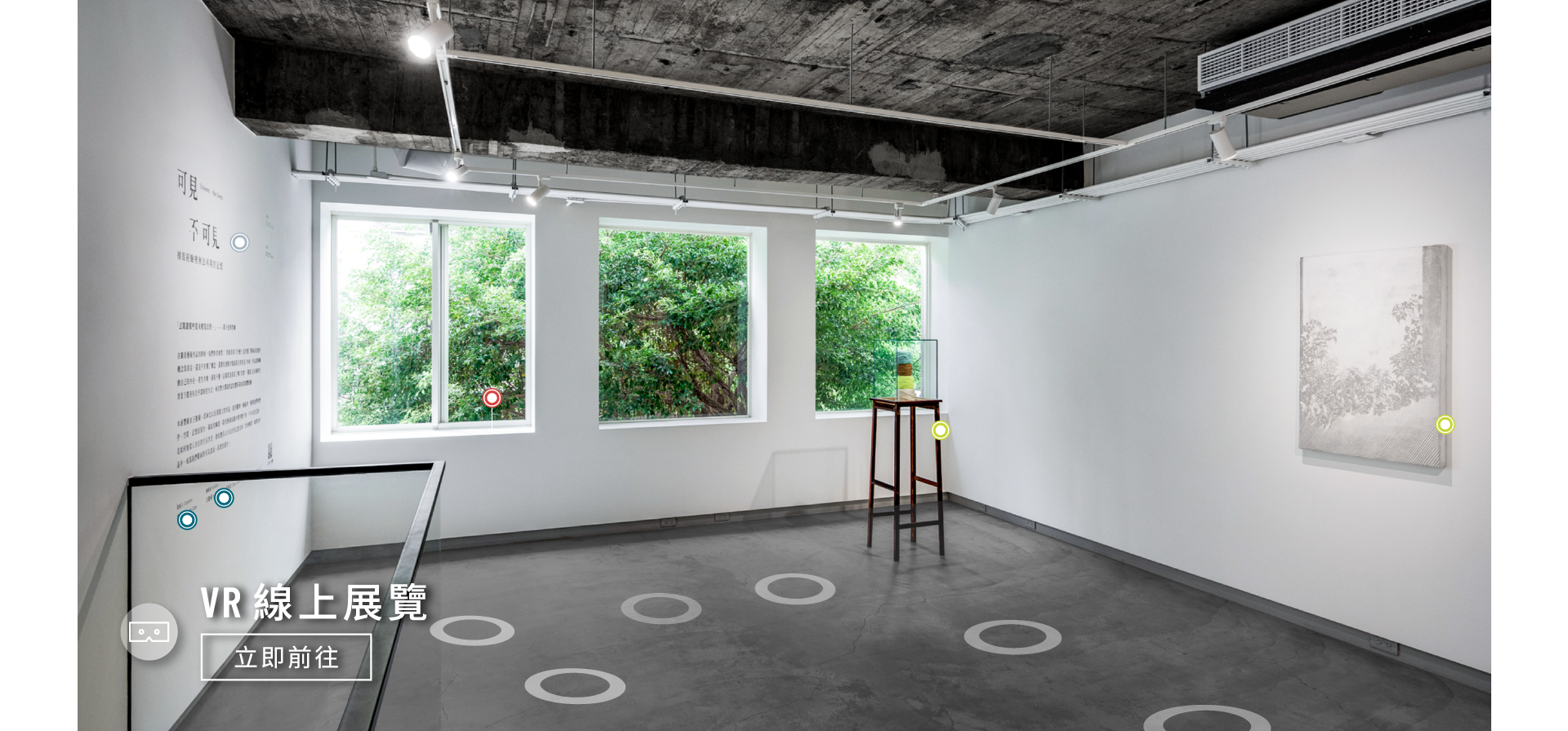
▎ 全新上線・VR虛擬實境線上逛
▎展覽資訊 Information
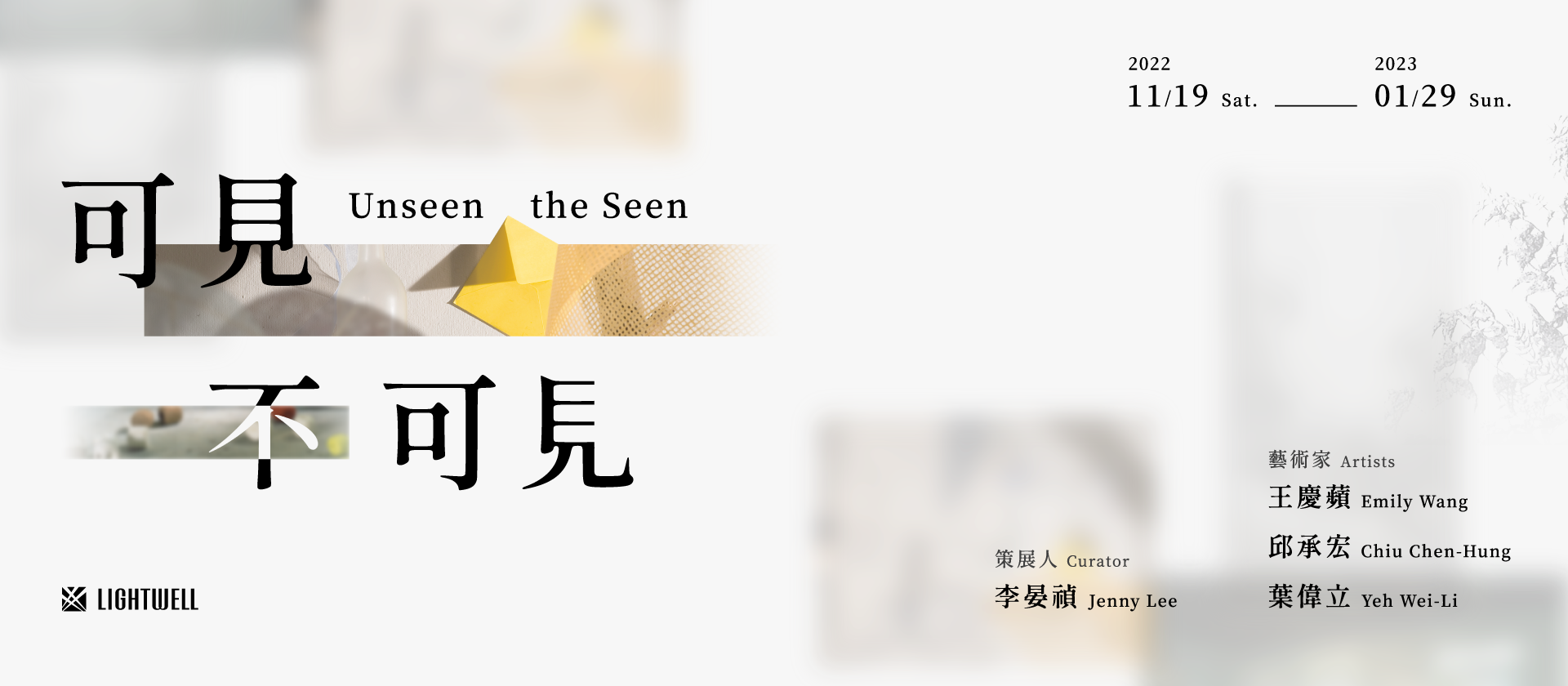
Public Days:2022/11/19 Sat. - 2023/01/29 Sun.
Opening Hour:12:00 - 20:00 (Closed on Monday)
Venue:LIGHTWELL 2F-3F (No. 6-1, Ln. 20, Sec. 2, Zhongshan N. Rd., Zhongshan Dist., Taipei City)
Ticket:TWD 150
How to buy a ticket:Ticket window、Online
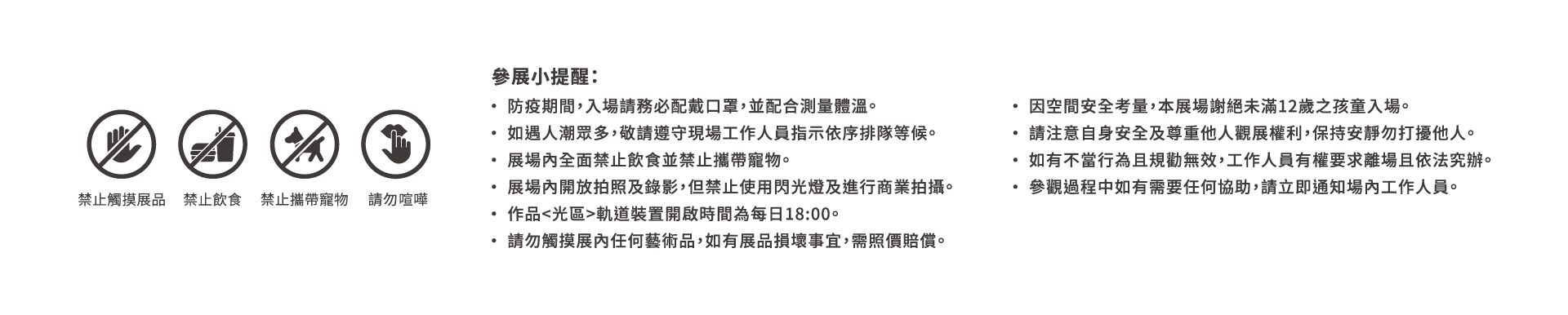
▎觀展注意事項 Notice